
Serverless computing is a cloud computing model that allows developers to build and run applications without having to manage servers. In a traditional server-based model, developers are responsible for provisioning, scaling, and maintaining servers to run their applications. With serverless computing, developers can focus on writing code and deploying applications without worrying about the underlying infrastructure.
Serverless computing is often referred to as Function as a Service (FaaS) because developers write functions that are triggered by events and run in response to those events. These functions are small units of code that are designed to perform specific tasks and can be easily scaled up or down based on demand.
How Does Serverless Computing Work?
Serverless computing works by abstracting the server management from the developer. When a request is made to an application deployed on a serverless platform, the platform automatically provisions the necessary resources to run the function and executes it. Once the function completes its execution, the resources are deallocated, making serverless computing highly efficient and cost-effective.
Serverless platforms like AWS Lambda, Azure Functions, and Google Cloud Functions provide developers with the tools and infrastructure to deploy and manage their functions without having to worry about servers. These platforms offer autoscaling capabilities, high availability, and pay-as-you-go pricing, making serverless computing an attractive option for many developers.
Examples of Serverless Computing
1. Image Processing: Suppose you have a web application that allows users to upload and share images. With serverless computing, you can write a function that processes the uploaded images, resizes them, and stores them in a cloud storage service like Amazon S3. This function can be triggered by an event whenever a new image is uploaded, making image processing seamless and scalable.
2. Real-time Data Processing: If you have a streaming data application that requires real-time processing of incoming data, serverless computing can be a great fit. You can write functions that process the incoming data, perform analytics on it, and store the results in a database or data warehouse. These functions can be triggered by events from the data stream, enabling real-time data processing without the need for managing servers.
3. Webhooks and APIs: Serverless computing is well-suited for handling webhooks and APIs. You can write functions that respond to incoming HTTP requests, process the data, and return a response. This is particularly useful for building microservices architectures and integrating with external services or third-party APIs.
Benefits of Serverless Computing
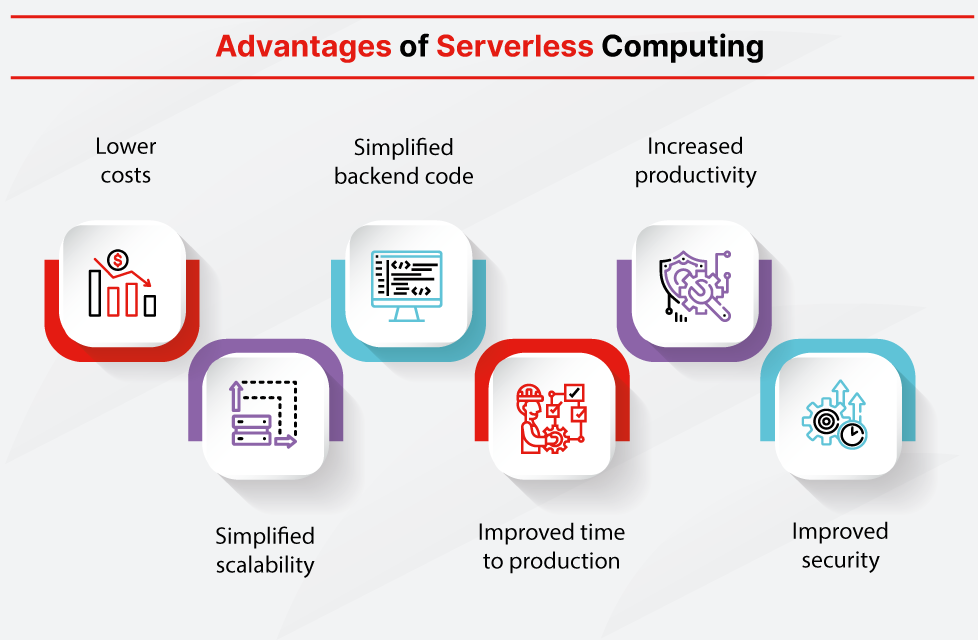
1. Cost-Efficiency: With serverless computing, you only pay for the resources you use, making it a cost-effective option for running applications with varying workloads.
2. Scalability: Serverless platforms automatically scale resources based on demand, allowing your applications to handle spikes in traffic without manual intervention.
3. Developer Productivity: By abstracting the server management, serverless computing allows developers to focus on writing code and deploying applications quickly, reducing time to market.
4. Reduced Operations Overhead: Serverless platforms handle infrastructure maintenance, monitoring, and scaling, freeing up your operations team to focus on higher-level tasks.
Serverless computing is revolutionizing the way applications are built and deployed, allowing developers to focus on writing code and delivering value to their users. Whether you’re building a small web application or a large-scale data processing pipeline, serverless computing can help you streamline your development process and scale your applications with ease.