
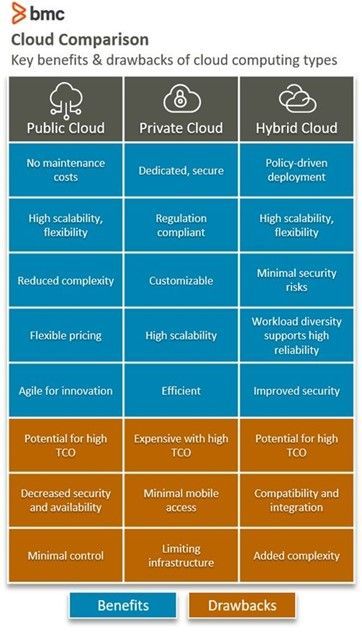
In today’s digital age, cloud computing has become an essential part of businesses. There are different types of cloud services available, including public, private, and hybrid clouds. Each type has its own set of advantages and disadvantages. In this article, we will explore the differences between public, private, and hybrid clouds to help you understand which might be the best option for your business.
Public Cloud:
A public cloud is a type of cloud computing that is offered by third-party providers over the internet. It is a shared infrastructure where multiple users can access the resources, such as servers and storage, on a pay-as-you-go basis. Public clouds are cost-effective and easy to scale, making them ideal for small to medium-sized businesses with fluctuating workloads. However, security and privacy concerns can be a drawback for organizations with sensitive data.
Private Cloud:
A private cloud, on the other hand, is a cloud infrastructure that is dedicated solely to one organization. It is typically hosted on-premises or by a third-party provider and offers greater control, security, and customization options. Private clouds are ideal for businesses with strict compliance requirements or sensitive data that cannot be stored on a public cloud. However, they can be more expensive to set up and maintain compared to public clouds.
Hybrid Cloud:
A hybrid cloud combines elements of both public and private clouds, allowing organizations to utilize the benefits of both. In a hybrid cloud environment, businesses can store sensitive data on a private cloud while using public cloud resources for non-sensitive workloads or to handle spikes in demand. This flexibility makes hybrid clouds the most popular choice for businesses with varying needs and workloads. However, managing a hybrid cloud can be complex and require a skilled IT team.
Key Differences:
Public clouds are shared environments, while private clouds are dedicated to one organization.
Public clouds are cost-effective and easy to scale, while private clouds offer greater control and security.
Hybrid clouds combine the benefits of public and private clouds, providing flexibility and scalability.
Conclusion:
Choosing the right type of cloud for your business depends on your specific needs, budget, and security requirements. Public clouds are best suited for small to medium-sized businesses with fluctuating workloads, private clouds for organizations with strict compliance requirements, and hybrid clouds for businesses looking for a balance between cost-effectiveness and security. Regardless of the type of cloud you choose, it’s important to work with a reliable cloud service provider to ensure the success of your cloud migration strategy.