
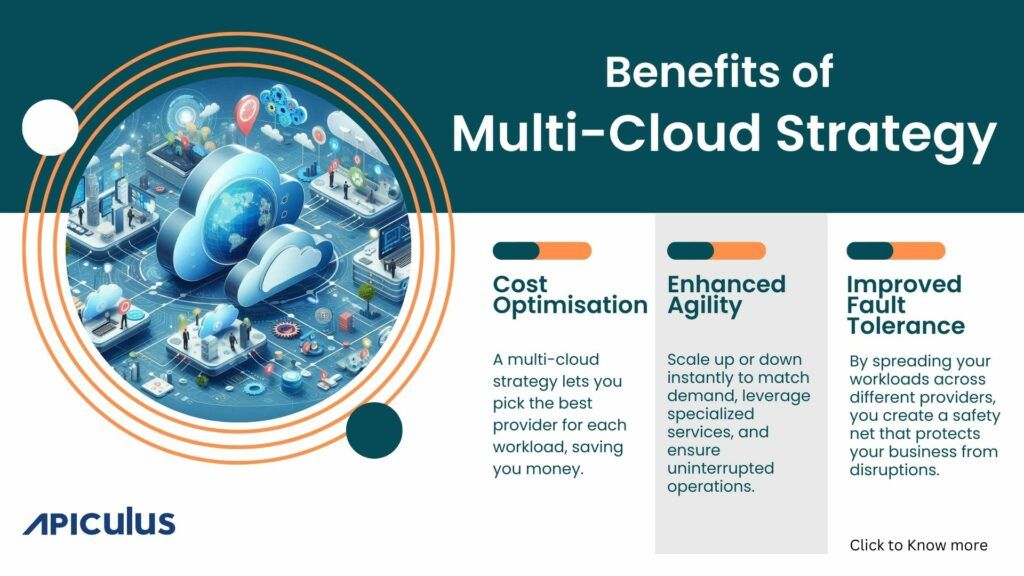
As technology continues to evolve, more and more businesses are turning to multi-cloud strategies for their IT infrastructure. A multi-cloud strategy involves using a combination of public, private, and hybrid cloud services from different providers to meet the unique needs of an organization. In this article, we will explore the numerous benefits that a multi-cloud strategy can offer to enterprises.
Increased Flexibility and Scalability
One of the key advantages of a multi-cloud strategy is the increased flexibility and scalability it provides to enterprises. By utilizing multiple cloud providers, businesses can easily scale their IT resources up or down based on their changing needs. This allows organizations to quickly adapt to market changes and customer demands, without being locked into one vendor or provider.
Improved Performance and Reliability
Another benefit of a multi-cloud strategy is the improved performance and reliability it offers. By spreading their workloads across multiple cloud providers, enterprises can ensure that their applications and data are always available and running smoothly. In the event of a service outage or downtime from one provider, businesses can easily switch to another provider to prevent any disruptions to their operations.
Enhanced Security and Compliance
Security and compliance are top priorities for enterprises, and a multi-cloud strategy can help enhance both. By utilizing multiple cloud providers, businesses can implement different security measures and protocols to protect their data and applications. This can help reduce the risk of data breaches and cyber attacks, while also ensuring compliance with industry regulations and standards.
Cost Savings and Efficiency
Implementing a multi-cloud strategy can also lead to cost savings and improved efficiency for enterprises. By choosing the most cost-effective cloud services for each workload, businesses can optimize their IT spending and reduce overall operating costs. Additionally, the ability to quickly scale resources up or down based on demand can help businesses avoid over-provisioning and under-utilization of their IT resources.
Better Disaster Recovery and Business Continuity
Disaster recovery and business continuity are essential for enterprises to ensure the uninterrupted operation of their business in the event of a disaster or system failure. With a multi-cloud strategy, businesses can easily replicate their data and applications across different cloud providers to ensure redundancy and resilience. This can help minimize downtime and data loss, and ensure that businesses can quickly recover and resume their operations in the event of a disaster.
Improved Innovation and Competitive Advantage
Lastly, a multi-cloud strategy can help businesses drive innovation and gain a competitive advantage in the market. By leveraging the unique capabilities and services offered by different cloud providers, enterprises can rapidly develop and deploy new applications and services. This can help businesses stay ahead of the competition and meet the evolving needs of their customers, while also enabling them to explore new revenue streams and business opportunities.
Conclusion
In conclusion, a multi-cloud strategy offers numerous benefits to enterprises, including increased flexibility and scalability, improved performance and reliability, enhanced security and compliance, cost savings and efficiency, better disaster recovery and business continuity, and improved innovation and competitive advantage. By leveraging the strengths of multiple cloud providers, businesses can optimize their IT infrastructure and operations, and drive growth and success in today’s digital economy.